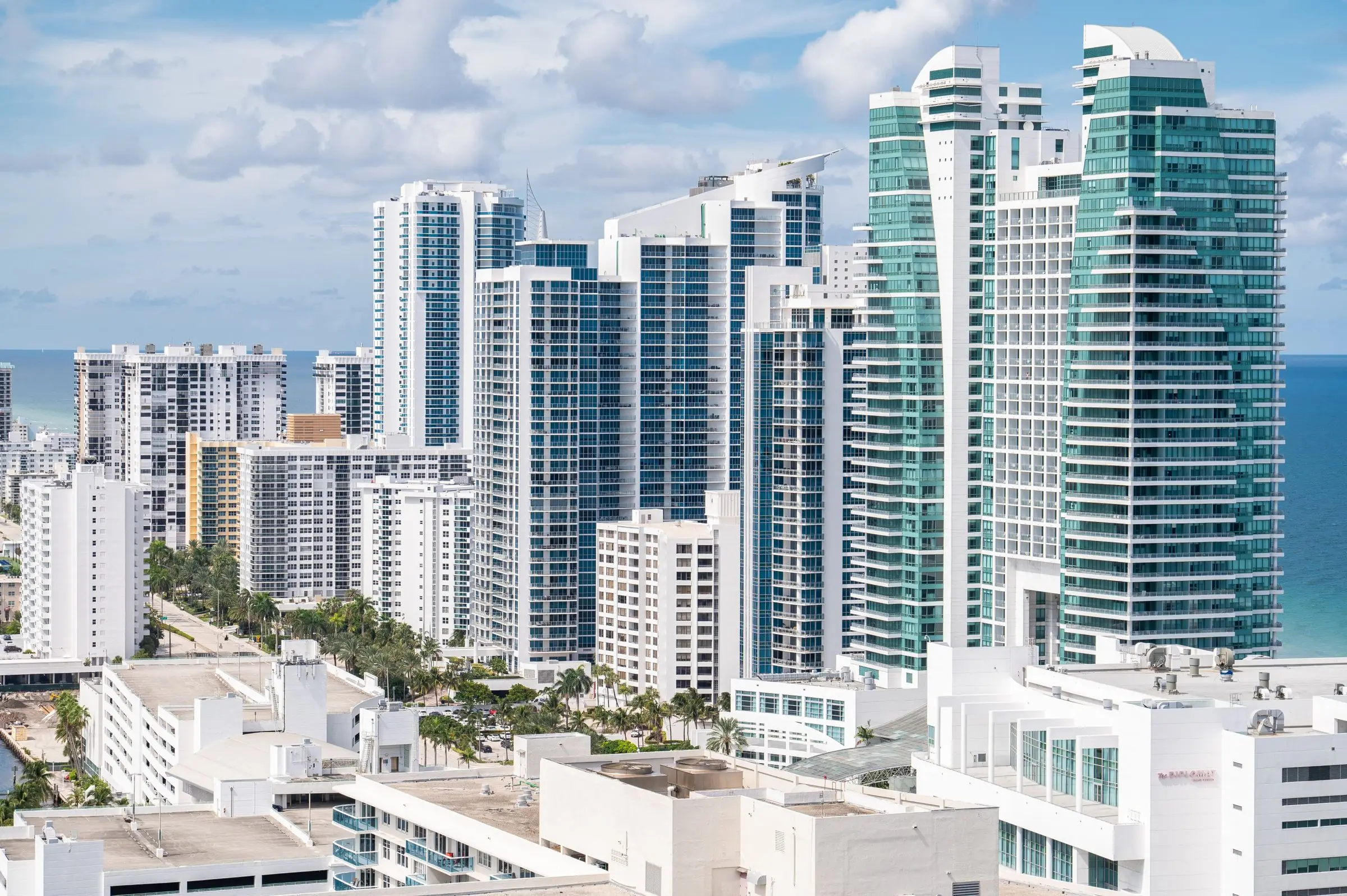
You don’t need to live in the United States — or even be here — to own a Miami condo. As a foreign national you can finance one without a U.S. credit score, without a Social Security number, and without a U.S. income history. International buyers do it here every week. Here’s how the process actually works, start to close, from wherever you are.
Miami is built for this
Owning property in Miami as an international buyer isn’t unusual — it’s normal. South Florida is a global city, and a large share of its condo market is foreign-owned. That means the financing, the closing process, and the professionals around it are all set up to work with buyers who live abroad. You’re not forcing a square peg into the U.S. mortgage system; you’re using a lane that already exists — and one where national lenders barely compete.
You don’t need U.S. credit
The single biggest worry we hear: “I don’t have a credit score here.” You don’t need one.
Instead of a U.S. FICO score, we can qualify you using:
- An international credit reference or reference letters from your banks abroad
- Your home-country income, verified the way you actually earn it — a foreign employment letter if you’re regularly employed, or a letter from your foreign CPA / accountant if you’re self-employed (translated where needed). No U.S. tax returns.
- Or skip personal income entirely — if you’re buying to rent, we can qualify the property on its own rental income with a DSCR loan (investment / business-purpose only; more below).
- Passport and visa documentation for identity and status
- Clear source-of-funds documentation and reserves
No Social Security number. No U.S. tax returns. The U.S. system may not have a file on you — we build one that works.
The easiest path is usually an investment
If you’re buying the condo to rent it out, the process is often simpler than it is for a local buyer. We can qualify the property on its own rental income with a DSCR loan — no personal income documentation at all. It’s business-purpose financing, and for a foreign investor it’s frequently the cleanest route to closing.
Buying a place for your own use instead? That’s a second-home loan, documented through your income and assets abroad — a different file, and we’ll set it up correctly from the start. Either way, an LLC is often the right way to hold an investment purchase, and we’ll walk you through it.
A Miami note: condos and “condotels”
Many of the most desirable Miami buildings — especially on the water — are non-warrantable or run partly like a hotel (a “condotel”). Most banks decline these on sight. We don’t; placing condo and condotel financing with the right investor is part of what we do. So if you’ve fallen for a specific building, don’t assume it’s off-limits until we’ve looked at it.
What to expect
- Larger down payment. Foreign national loans generally require a larger down payment than a loan for a domestic borrower. We’ll tell you exactly where you land for your scenario — no surprises.
- You can start from anywhere. Much of the process is handled remotely; you don’t need to be in the U.S. to begin.
- Documentation, translated. Home-country documents are fine — we’ll tell you what’s needed and how to present it.
Questions people actually ask
Can I buy a Miami condo if I’m not a U.S. citizen or resident?
Yes. Foreign national financing is built for exactly this.
Do I need a U.S. credit score or SSN?
No — international credit references and your foreign banking history work instead.
Is it easier to buy to rent or to live in?
Renting is often simpler — we can qualify the property on its rental income (a DSCR loan) rather than your personal income.
The building I want is a “condotel.” Is it financeable?
Often yes — we place non-warrantable and condotel financing that most banks won’t.
Do I have to travel to the U.S. to do this?
Not to start. Much of it is handled remotely.
Tell us the building (or the neighborhood) and where you’re based, and we’ll map the path to owning it — credit, documents, and structure.